
In India, academic medical centres have traditionally been hesitant to pursue international accreditation, often under the assumption that such recognition is not essential for academic institutions. A review of global literature indicates that, to date, only 70 academic hospitals worldwide have attained Joint Commission International (JCI) accreditation, and notably, no academic hospital in India has yet achieved this distinction. Through interviews with hospital administrators and quality professionals, several barriers to accreditation in the Indian context emerged. These include the sheer size and complexity of academic medical centres, a large and diverse workforce, resistance to change, and financial constraints.
However, the potential benefits of pursuing accreditation for academic institutions are substantial. Accreditation elevates healthcare delivery to global standards, ensuring a consistent and high-quality patient experience. It also provides students with hands-on training in an environment aligned with international best practices. The JCI framework, in particular, served as a unifying system—embedding patient safety, quality, and accountability into every aspect of care. Furthermore, the accreditation process strengthens research governance, enhances ethical oversight, and brings greater rigor to documentation and institutional review practices.
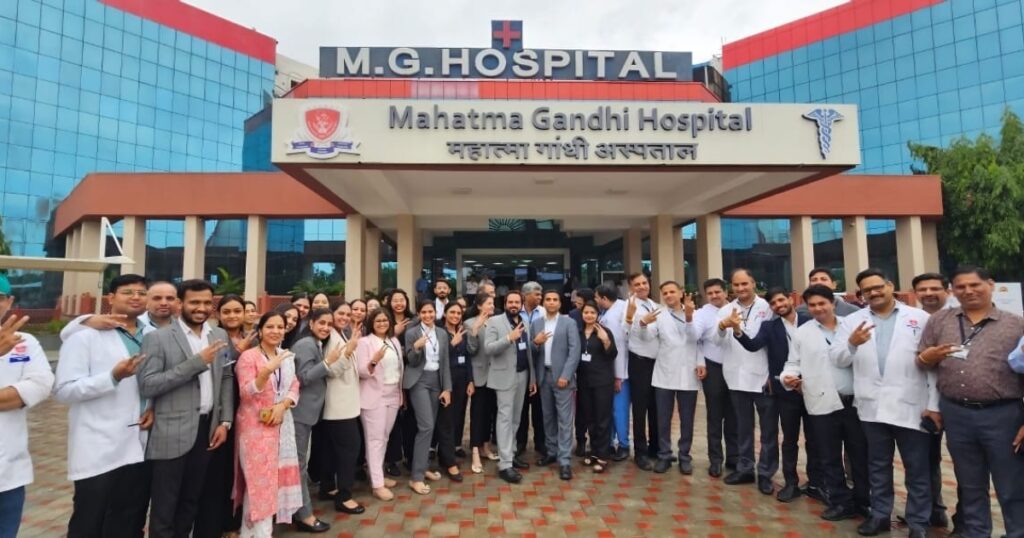
In mid-2024, Mahatma Gandhi Medical College and Hospital (MGMC) commenced its ambitious journey toward Joint Commission International (JCI) accreditation under the visionary leadership of its hospital directors and senior management. As the largest academic medical centre in Rajasthan, MGMC is a sprawling institution spread over 70,000 square meters, and supported by a workforce of more than 5,000 staff. The hospital consistently operates at full occupancy, catering to national and international patients. Its catchment area extends beyond Jaipur, drawing large patient volumes from nearby districts such as Bikaner, Alwar, and others.
The scale and nature of the hospital posed several formidable challenges during the accreditation process. One of the key obstacles was the need to engage teaching faculty—with academic responsibilities—in accreditation-related activities. Perhaps the most complex task was the development and implementation of standardized, JCI-compliant documentation across such a large, dynamic, and multifaceted setup.
With guidance and technical expertise from Partners Consultants International, the hospital adopted a comprehensive approach:
Gap Assessment & Action Plan: An initial gap analysis identified key areas for improvement – from clinical pathways to safety protocols and administrative processes.
Intensive Training Programs: Clinical staff, faculty, residents, and support teams underwent continuous education sessions on JCI standards, quality improvement methodologies, and evidence-based practices.
Process Standardization: Every department standardized clinical workflows, infection control protocols, and patient-centered care practices to align with global benchmarks.
Mock Surveys & Internal Audits: Rigorous rehearsals and independent audits ensured staff readiness, while fostering a culture of quality and safety.
Leadership Engagement: Hospital directors and departmental heads championed the change, bridging operational challenges with strategic vision and aligning stakeholders at every level.
As part of the JCI preparation, infrastructural upgrades were carried out across this 25-year-old medical complex to enhance the patient experience and align with international standards.
After 11 months of vigorous preparation MGH becoming the only academic hospital in India to earn Joint Commission International (JCI) accreditation
Key opportunities
- Being JCI-accredited positioned MGMCH as a premier destination for international patients, students, and faculty exchanges.
- Adoption of structured quality improvement (QI) initiatives enhanced the quality of postgraduate medical training, supported by evidence-based protocols and global exposure.
- Accreditation drove stronger interdepartmental coordination, leading to better care transitions, reduced duplication, and improved resource utilization.
- A dramatic increase in incident reporting and a non-punitive learning environment improved overall safety and trust among staff and patients.
- Implementation of audit dashboards supported a scalable and sustainable quality culture.
- MGUMST established ongoing quality councils and data-driven monitoring tools to ensure that JCI standards remain integrated into daily practice, not just during the accreditation process.
The journey towards JCI accreditation transformed MGUMST not only into a globally recognized academic medical centre but also into a quality-conscious organization focused on patient safety, staff empowerment, and academic excellence. The roadmap created during this journey is now being adapted by peer institutions across India, reflecting a broader shift toward global benchmarks in Indian healthcare.